Practicing for a 17th century sonata.
Soon available on Deutsche Gramophon (depending on your concept of soon).
by Mário Vicente 马君皓
Practicing for a 17th century sonata.
Soon available on Deutsche Gramophon (depending on your concept of soon).
I was surprised to watch this and come to suspect that an isomorphism can be established between my view of Nothing as a “reality generator” in its quality of a universal “inversor”, and Jakob Boehme’s nature of the Holy Spirit.
But unlike him, I am an advocate of the supremacy of pure and simple logic instead of faith through intrincate mazes in which you are more likely to get lost and believe whatever you want to believe, than otherwise to actually develop your understanding. It is good to believe in good things, but even better to believe and to understand them.
The following link points to the relevant part I am addressing: https://youtu.be/83rZ_8aWSXw?t=1236
background image: wallsneedlove.com (partial reproduction)
The lowest note a violin can produce is the open G string.
The highest note is naturally on the E string and can only be produced with harmonics.
Harmonics are played not by pressing the string with the finger, thus fixating its vibrating length, but instead by just touching gently the string at a point that is an integer divisor of the vibrating length of the string which with harmonics is the full 33 cm of the open string. They produce a flute-like tone.
Therefore, with harmonics one is limited to a quantized note range while when fixating the vibrating length the range is continuous.
background image: wallsneedlove.com (partial reproduction)
Quote from Peter Senge.
This is a series of short compositions mainly on piano.
No.1
No.2
No.3
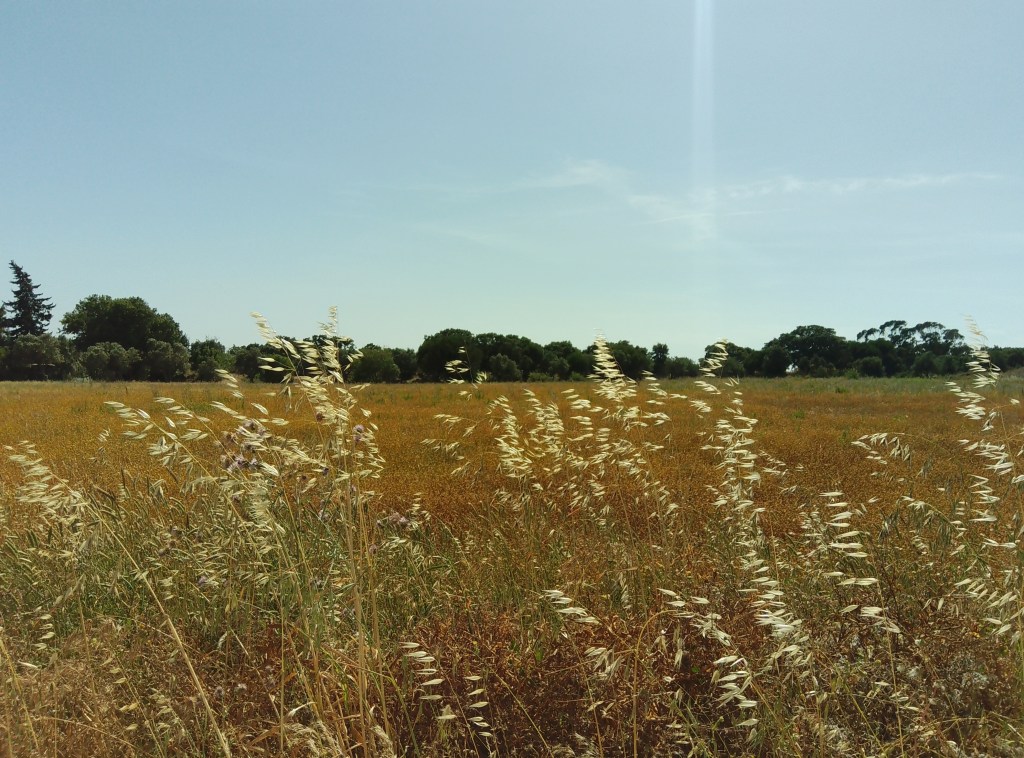
Here there is a rectangular patch of land with dense trees.
On this day there was strong wind parallel to that pach of land, so there was a section with little wind covered by the trees between two wind corridors.
A number of small birds was there. They were slighlty bigger than the usual little birds we see in urban parks and that I feed at my house balcony. They seemed much more aerodynamic, geared for high speeds and agility.
For more than an hour, I witnessed as those birds were doing laps between the two wind corridors.
They would speed by themselves along the windless part or the circuit and when they reached the wind section after leaving the cover of the trees they would spend a few seconds almost still in the air, sustained by the strong wind, and then they were shot like arrows back to where they came from as they caught the force of the wind.
They were using the wind wall as slingshot and doing round trips for over an hour, occasionally resting in a fence at the other edge of the tree wall.
As there was no obvious benefit from this behavior, I can only conclude that they were doing it as a play, they were enjoying it. They were playing like our kids do.
And that seemed a very interesting thing in itself, compounded by many of its implications.
I felt happy for them. I reminded of some bigger birds I have seen when surfing in the sea, that pierced waves consecutively when they could just fly above them.
Nothing, as an object, is a universal point of inversion.
Therefore, it acts as a reality generator.
The sound is obviously artificial, nevertheless, it very accurately reproduces the amplification of the strings’ sound by the body of the accoustic violin, as well as the players’ movements.
It just seems to dampen the vibrato, but I can be misled by using different strings.
But the main advantage is that I can record regardless of the actual acoustic conditions of the place.
It also allows the player to hear himself as if in the audience, which means real-time feedback on performance.
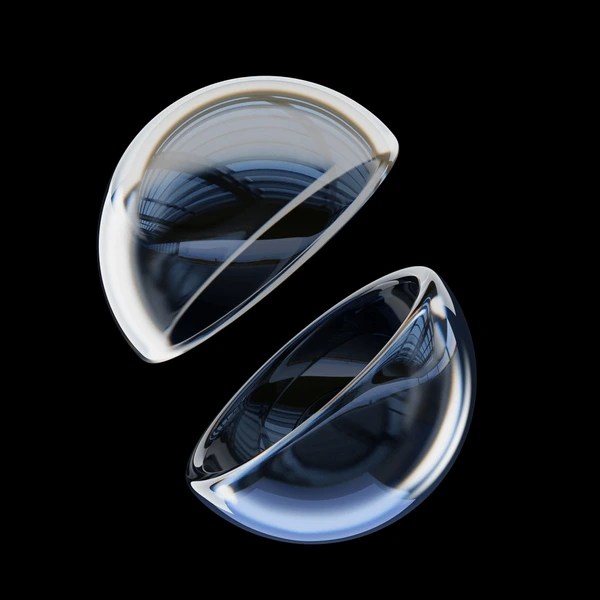
If you turn a hollow sphere inside-out, you have to make its surface go through its center, at that instance everything is one single thing.
Alone.
Nothing else.
But the process continues and when unfolding, that single thing generates its entirety again.
From one thing, every thing.
Refer also to this post.

