Playful creatures

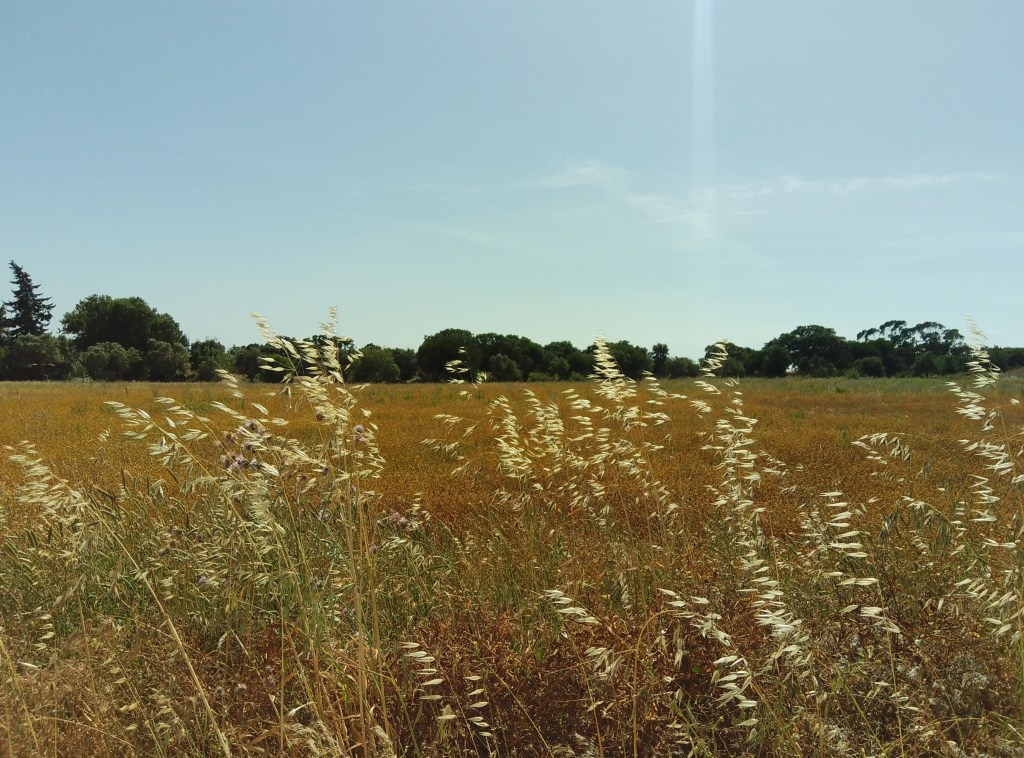
Here there is a rectangular patch of land with dense trees.

On this day there was strong wind parallel to that pach of land, so there was a section with little wind covered by the trees between two wind corridors.

A number of small birds was there. They were slighlty bigger than the usual little birds we see in urban parks and that I feed at my house balcony. They seemed much more aerodynamic, geared for high speeds and agility.

For more than an hour, I witnessed as those birds were doing laps between the two wind corridors.

They would speed by themselves along the windless part or the circuit and when they reached the wind section after leaving the cover of the trees they would spend a few seconds almost still in the air, sustained by the strong wind, and then they were shot like arrows back to where they came from as they caught the force of the wind.

They were using the wind wall as slingshot and doing round trips for over an hour, occasionally resting in a fence at the other edge of the tree wall.

As there was no obvious benefit from this behavior, I can only conclude that they were doing it as a play, they were enjoying it. They were playing like our kids do.

And that seemed a very interesting thing in itself, compounded by many of its implications.

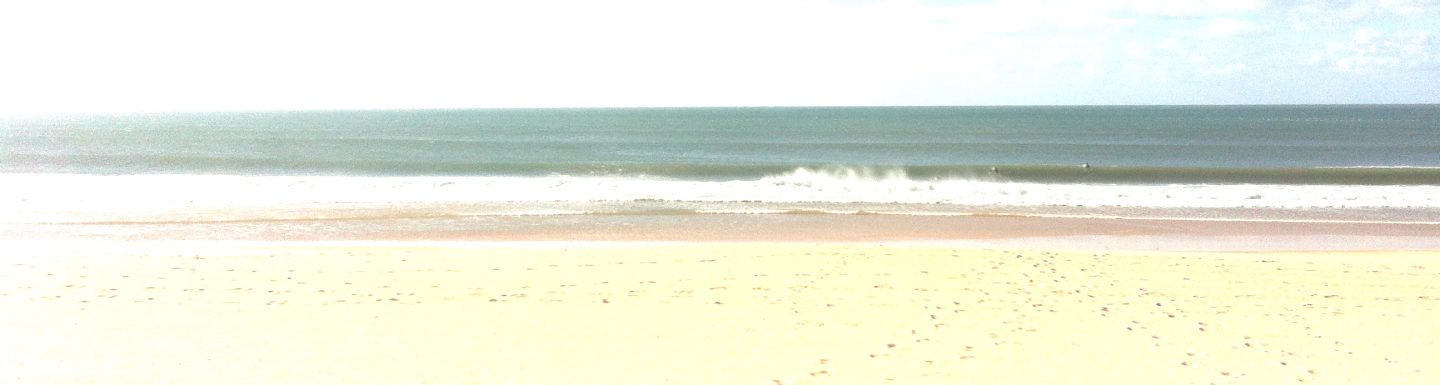
I felt happy for them. I reminded of some bigger birds I have seen when surfing in the sea, that pierced waves consecutively when they could just fly above them.
The organization of the future

assemblies of cellular composite material at MIT by Kenneth Cheung

In the organization of the future there are only two groups of people: those who create value and those who coach into value creation.
In the organization of the future there is no place for “managers” because the psychological mechanism that justifies them is made redundant.
The need for a “manager” is a symptom that you need investment in either of those two groups of people. Therefore instead of spending money on proxies you spend on addressing the real needs of your organization.
The only investment that makes economic sense is the investment in value creation.

The fact that we separate subjects of scientific study (“management” in this case) and consider them isolated from everything else is a scientific mistake as Descartes himself pointed out in his “Rules for the Direction of the Mind”. Its what PMI terms a “reduccionist approach” to understanding systems. But we compound that error with another one which is to apply the same approach to the application of those principles. That is why we pay people just to “manage” instead of investing in a unified evolving semi-autonomous and lightly-governed value creation structure — the organization of the future.

Jack Dorsey (former CEO of Twitter) recently claimed that he can dismiss all middle managers and have direct access to his workers. He is correct in doing so not exactly because of his argument (based on automation technology) but because of the principle stated above.

Donald Reinertsen in his book “The Principles of Product Development Flow, 2nd Generation Lean Product Development” applies principles from network engineering, manufacturing, the military and others, to the approaches for managing complex systems under variability conditions. It is aligned with the principle stated by Descartes. Its proper science.

True Learning

Here’s where the comedy begins.
Those who most loudly claim their superiority on account of their credentials are often the people who have most carefully avoided the risks that produce greatness.
Have they endured years of structured, proper thoughts?
Have they ever stood alone with an idea that is un-yielding, that refuses to bend to the consensus?
Have they pursued it where it led no matter the consequences?
The tragedy is not that such people exist, but that they have been mistaken for people who should be taken seriously.
That is what should bother you if you are a free thinker.

Alfred Cromwell

Genesis

The first thing that came to existence should by definition have been single, since it was the outcome of the first change that ever happened.
Because it came to existence from nothing, it had to contain the principle of change in itself, since change is an attribute and not an object.
Therefore the first thing changed.
Once change created quantity, the first system was born.
The first system generated new things which in turn generated new systems.

This process still happens today. In fact, it is the only thing that has ever happened.
Therefore, still today new things can be generated out of nothing like their own kind.
At any moment, a system can be created like no other before it.

This is the fundamental magician principle in the Tarot card No 1.

This music captures that moment when the Genesis change is about to take place.
When interacting components are about to create a new system and the Creation takes place again.

The Magician

card no 1 of the Knapp Hall tarot deck

The modern depictions of the magician are too explicit. Earlier renditions were more instructive. You see, the magician was portrayed as a trickster, entertaining kids or amused adults. This is what regular people see. They look at the magician’s dexterity with so many things and they take it as a narrow capability split between stuff. He does fancy stuff with this, he does fancy stuff with that, and you are entertained. They look at it as if looking at each hand alone in a piano performance for two hands.

But what only adepts understand is that the magician operates at a system’s level. Its about the interactions between those different things, a whole greater than the sum of its parts. In order to understand this character you need to imagine the system behind all that fancy stuff. Imagine a system in which you can do as you please with so many different assets, even if they are new to you.

That’s what’s really going on. The rest is entertainment.

The magician understands the Genesis mystery.

Remember when you did something for the first time? Do it like a pro and you will have achieved the summit of this pyramid. And if you are a pro at doing things for the first time its because you started as a pro at starting things — you started as The Fool.

The card is No.1 and its the first lesson to the Fool not because it is of lesser value but because it is the compass for the journey, and a compass that points to itself as a destination. The beginning and the end is card No1. The Fool is the start of every Magician and the Magician is the Anti-Fool, or the Fool at the end of his journey.