Here’s where the comedy begins.
Alfred Cromwell
Those who most loudly claim their superiority on account of their credentials are often the people who have most carefully avoided the risks that produce greatness.
Have they endured years of structured, proper thoughts?
Have they ever stood alone with an idea that is un-yielding, that refuses to bend to the consensus?
Have they pursued it where it led no matter the consequences?
The tragedy is not that such people exist, but that they have been mistaken for people who should be taken seriously.
That is what should bother you if you are a free thinker.
Category: posts
Genesis
The first thing that came to existence should by definition have been single, since it was the outcome of the first change that ever happened.
Because it came to existence from nothing, it had to contain the principle of change in itself, since change is an attribute and not an object.
Therefore the first thing changed.
Once change created quantity, the first system was born.
The first system generated new things which in turn generated new systems.
This process still happens today. In fact, it is the only thing that has ever happened.
Therefore, still today new things can be generated out of nothing like their own kind.
At any moment, a system can be created like no other before it.
This music captures that moment when the Genesis change is about to take place.
When interacting components are about to create a new system and the Creation takes place again.
The sand cat
Real growth often happens in silence.
Strength is built in patience.
Do it like the sand cat — and you will call the desert your home.
The Magician
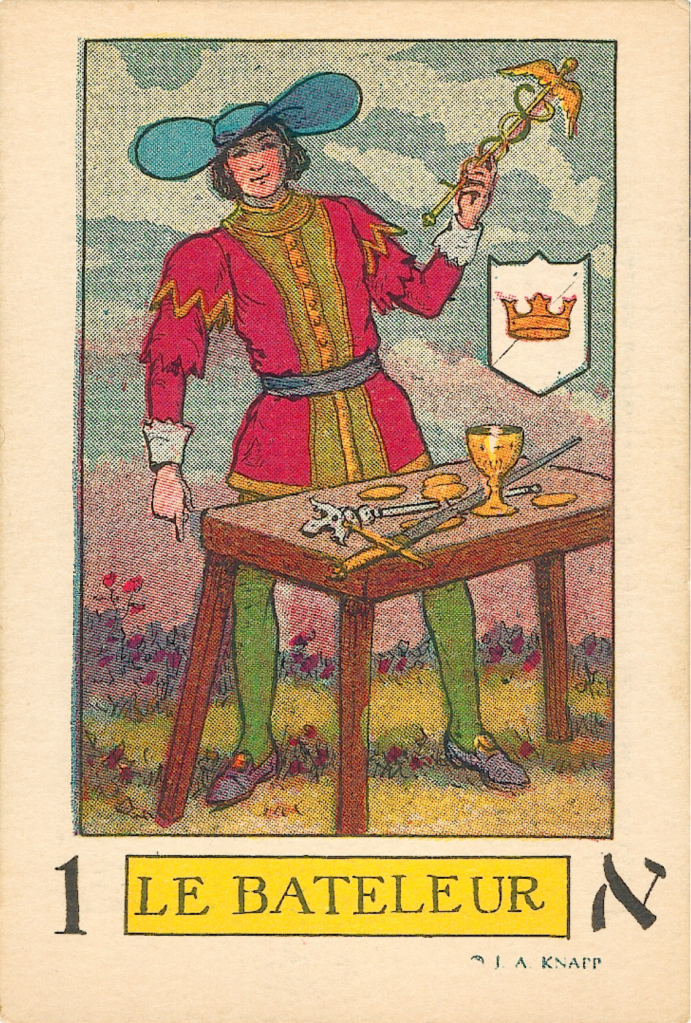
The modern depictions of the magician are too explicit. Earlier renditions were more instructive. You see, the magician was portrayed as a trickster, entertaining kids or amused adults. This is what regular people see. They look at the magician’s dexterity with so many things and they take it as a narrow capability split between stuff. He does fancy stuff with this, he does fancy stuff with that, and you are entertained. They look at it as if looking at each hand alone in a piano performance for two hands.
But what only adepts understand is that the magician operates at a system’s level. Its about the interactions between those different things, a whole greater than the sum of its parts. In order to understand this character you need to imagine the system behind all that fancy stuff. Imagine a system in which you can do as you please with so many different assets, even if they are new to you.
That’s what’s really going on. The rest is entertainment.
Remember when you did something for the first time? Do it like a pro and you will have achieved the summit of this pyramid. And if you are a pro at doing things for the first time its because you started as a pro at starting things — you started as The Fool.
The card is No.1 and its the first lesson to the Fool not because it is of lesser value but because it is the compass for the journey, and a compass that points to itself as a destination. The beginning and the end is card No1. The Fool is the start of every Magician and the Magician is the Anti-Fool, or the Fool at the end of his journey.
Stairway to Heaven
The perception of uniqueness
The new approach for true machine cognition is a dynamic and generative geometric system with mathematical precision.
It doesn’t guess; it just works. Every time.
Whatever you do, you invariably realize that you are something that just works. Every time. That is one of the things that gives you the perception of “uniqueness” or “specialty” (along with the fact that you cannot be defined by what you work “on”). Its that you always work. Always and whenever.
But that perception is something a posteriori relative to that “thing” that works. Get the point? You can only get it… because you work.
Civilian society
An example of why I have a saying that, not being meant to be interpreted literally, is:
There is no school worthy of that name besides the School of the Holy Ghost.
There is no academy worthy of that name besides the Military Academy.
All the rest is superfluous and just a scheme designed to bog people down.
Demolition of modern engineering
Differences between my approach to AI and the traditional symbolic approach:
- My approach produces reasonings with an arbitrary number of assumptions and end goals
- Lisp and Prolog have to be coded by you to work as you intend, but my approach organizes the information and the rules by itself
- Lisp and Prolog use a linear navigation in the solution space (“backtracking”) while my approach is non linear
- My approach is a geometric system
In fact, my approach is so non linear that it works in multithreading already natively. That is, the reasoning is constructed in parallel at the same time and consolidated in real time.
That is why it is scalable to much complex problems, unlike Prolog or Lisp, and that is something you need to get to human level intelligence and beyond.
As for the comparison between my approach and statistical approaches such as LLMs, the engineers’ favourite toy, well… I started using geometry for AI when everybody else was masturbating with LLMs. Today every new paper claims to improve LLMs with geometric approaches.
Draw your conclusions.
Egyptian Pyramid Technique
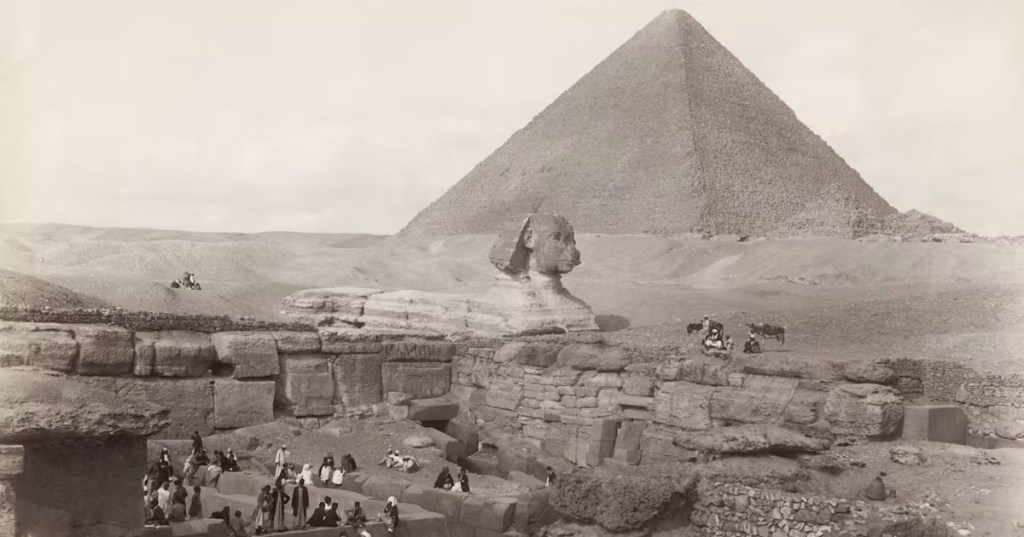
When discussing the way the pyramids were built we cannot afford to ignore one variable: TIME. Because what seems to be the hardest task becomes feasible with simple approaches in a sufficiently long timeframe.
The great pyramid (GP) took about 26 years to build with its 2.3 million blocks. We could consider the average time per block (4.12 days) to expect that at most it took about 8 days to place the hardest blocks. But that only has meaning under the assumption that the timeframe does not depend on the location of the block inside the GP.
A much more meaningful result is to average per course (block layer, or step, which total 206) because the added difficulty of moving bocks higher is somewhat cancelled by the fact that higher layers take fewer blocks to complete. This gives about EIGHT YEARS per layer as average, hence at most it could have taken SIXTEEN YEARS to complete a layer. 16 years is more than enough to move a 9 ton block up to the summit of the GP — with very simple mechanics.
Now you can divide the height of the pyramid by the timeframe to completion and you get the most simple formulation of the Egyptian pyramid building technique:
They only had to solve the mechanical problem of moving a several ton block up by X cm each time, making sure it cannot slip back down, and probably only do it once per day
Identity
About the question of Identity, you are invited to read Mathew 10,34-36.
Do not suppose that I have come to bring peace to the earth. I did not come to bring peace, but a sword. For I have come to turn a man against his father, a daughter against her mother, a daughter-in-law against her mother-in-law. A man’s enemies will be the members of his own household.
Matthew 10:34-36 NIV
Here Jesus speaks about an extraordinary thing He deliberated to do, a fundamental change deep within people, that is the demarking of individual identity. The separation between self and others, which is not the same as disfunctional opposition, but instead the construction of our own identity as a fundamental pre-requisite to any form of stable gathering of people.
But that is not all. God described himself to Moses as “I am that I am” (Exodus 3:14), which is an absolute identitarian statement.
Just like a painter loves his work when he sees his best qualities reflected therein, so the Creator of all things loves His work, and that is why we are given such important information.
Do not look at this as a burden to grasp but as an edifying tool for your human being. Having an Identity is a right granted to you by the Creator, something He wishes for you and something He considers of paramount importance.
 Compliments of the Author