All there is to thinking is seeing something noticeable which makes you see something you weren’t noticing which makes you see something that isn’t even visible.
Norman Maclean in A River Runs Through It, quoted by Frederick Goodman in Algebra – Abstract and Concrete, Ed 2.6, SemiSimple Press
I can’t praise enough Goodman’s book which you can find here, in case you’re interested in (introductory pure) mathematics.
Now, since
faith is the evidence of things not seen
excerpt from Hebrews 11:1 KJV
we can conclude that all there is to thinking is the knowledge of faith.
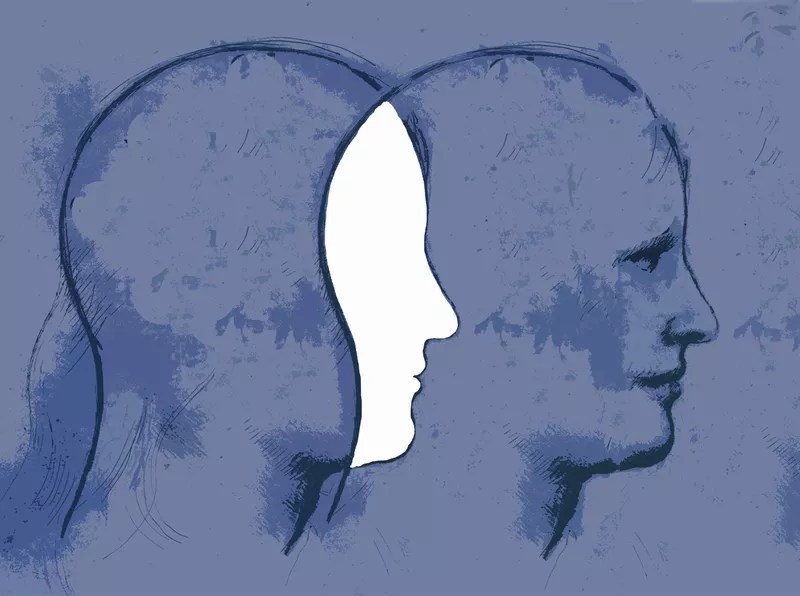
Here I address the question of knowing wether the Self, meaning whatever we call ourselves, is indivisible or otherwise.
The sole assumption on which the reasoning rests is this:
— there is nothing which cannot be the object of perception, be it trough the senses or the intelect.
Now we assume that the self is indivisible.
If that is the case, then the self cannot uniquely identify with any specific (indivisible) object of perception, because there is no assumption that favours that object over any other. If we did identify it with a particular object, we would be contradicting its indivisibility since that identification would be arbitrary. That is, we would be stating that any object of perception could satisfy the requirements of an indivisible self.
Since by assumption there is nothing which cannot be the object of perception, then the indivisible self would be nothing, that is, that which cannot be object of perception.
We contradicted the indivisibility assumption, therefore proving it false.
This leaves the only alternative, that is the complement of the indivisibility of the self: the self is the whole of “its” perceptions. There is nothing else other than everything that is perceivable, hence the quoted “its”. No intermediate subset of it could be termed “self”.
This in turn means that the conscious effort (or the “life of the self”, or “consciousness”) is the distinguishing of a part of the self into an object of perception.
Of course we can explore other knowledge basis in which we admit the opposite of the first assumption (which is undoubtely an anthropocentric one), but the least we should do in any case is to make clear what are the minimal parameters, that is, the degree of choice we have to be able to develop knowledge about any subject. Another way to put this, is that here the structure of knowledge is no less important than the meaning of that structure.
More generaly, this structure means that if we admit the indivisibility of the Self, then we cannot turn it into an object of perception. Moreover, regardless of divisibility, the Self is in any case unperceivable.
Final remarks:
pay attention to the implications of the initial assumption, which apply directly to any scientific endeavour and to scientific fields of knowledge. In particular, in Medicine. Here care to understand how its understanding of the personality fares against its own rational and scholastic assumptions.
we can easily generalize the assertions to other objects of the intellect other than the Self, with the same results.
this explains why the platonic world of ideas is, to our understanding, absolutely divorced from the realm of its concrete manifestations, although obviously both should be related regardless of our ability to perceive, ever since we admit the idealistic equivalence class of objects.
we are not an agent that acts, feels and understands; we are literally what we do, feel and understand. This also explains the effectiveness of propaganda and coercion on the development of mass psychosis.
this is in accord with Adyashanti’s notion that “Everything is I” as exposed in this video
this does not mean that the Self does not exist, or that the knower does not exist, but instead that it is impossible to identify what that is.
remark #4 is worth considering on a cartesian and rosicrucian perspective, since it is equivalent to asserting the reality of any intellectually formulated concept.
Considering time as a 4th dimension of existence has its consequences. The fabric of the universe, that is, the structure in which everything exists, pre-exists to any such a thing. I know that something exists a mile from me in some direction, regardless of my ability to sense it, merely because the space coordinates extend to that point. I know that something exists 10 minutes from now and I only need 10 minutes to prove it. Moreover, it is invariant, meaning that it is the perception of the observer about the universe that is subject to change, not only relative to other observers (relativity) but also relative to the same observer in different circumstances. So, if time is a dimension of this structure, then all past events and all future events are “happening” as much as the present ones, because they lack none of the 4 dimensions required for existence. They still locate themselves at some space coordinate system and a moment in time. Therefore, it would be the case that it is not time that flows but instead it is the observer who measures time who moves relative to the time(-space) coordinate, and even more, since every observer has a measure of the passage of time that does not depend on his will, then it is not the observer that is in motion but something fundamental to the observer. If we accept that we could have made different choices in the past, then all possible past events exist and consequently all possible future events exist, not just one. This in turn would require at least a 5th dimension to the universe to distinguish between different events at the same place and at the same time. The invariant aspect of that motion, the law of this motion, is more elementary than the observers of the motion. The act of measuring time is itself a perspective of, or a motion in, the universe, and in this regard consistent with the Liebniz concept of Monad — both a perspective of the universe and the universe under a particular perspective.
Disclaimer: This content is made public under the terms and conditions stated in the user agreement which you can read here. Access to this page or to any of its resources, direct or otherwise, implies acceptance with all the terms and conditions thereby stated. ____________
Bandalheira privada, como é evidente.
Afinal, a Uber não era a personificação do incrível mundo das startups, do empreendorismo e da modernidade capitalista, era apenas mais uma multinacional disposta a abusar do poder, fugir à lei e enganar meio mundo para enriquecer os seus accionistas.
Mark macGann não poderia ter sido mais claro: “vendemos às pessoas uma mentira”.
Disclaimer: This content is made public under the terms and conditions stated in the user agreement which you can read here. Access to this page or to any of its resources, direct or otherwise, implies acceptance with all the terms and conditions thereby stated. ____________
Desde a indústria académica, passando pelos industriais das empresas e as suas “engenharias”, até aos engenheiros farsantes que não passam de papagaios incompetentes de farsas industriais, toda a moderna indústria está aqui perfeitamente retratada e explicada.
(…) os seus excessos não podem ser tidos como um plano malévolo, mas que foram apenas os devaneios de uma dona de casa que não tem mais que o ensino médio e que passa a maior parte do seu tempo a aborrecer-se com os afazeres domésticos.
(…) a maioria das entradas falsas foram como uma engenharia a que se viu forçada pela própria coerência da narrativa que iniciara nas primeiras entradas que editou e que deixaram uma série de lacunas a pedir resolução.
“Como diz o ditado, para se contar bem uma mentira, aquele que lhe deu origem não demora a perceber que esta exige a companhia de outras que a sustentem. Uma vez que senti relutância em apagar centenas de milhares de palavras que já havia escrito, acabei por ceder ao artifício que eu própria criara (…)”
Being in direct contact with Nature means being in direct contact with reality.
The opposite means operating under assumptions, probabilistic reasoning, external expectations, foreign constructs that set you up at a most often disadvantaged position, because the goal of comunicating between people and managing relationships between people is, and always was, driven by a sole objective: to achieve advantage of the individual over the circumstances and that includes over other people.
«All of these processes are designed to erase reality.»
These are excerpts from the 2006 Globe surf movie “The Secret Machine” dir by Joe Guglielmino.





 Compliments of the Author