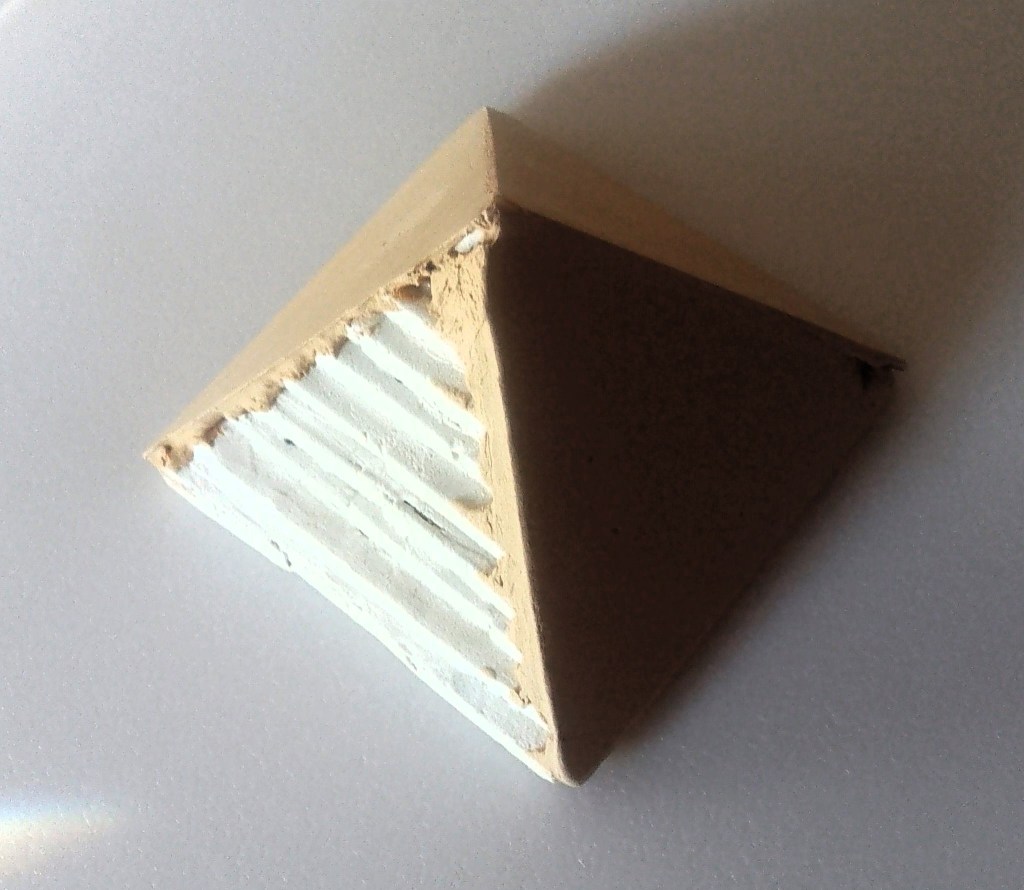
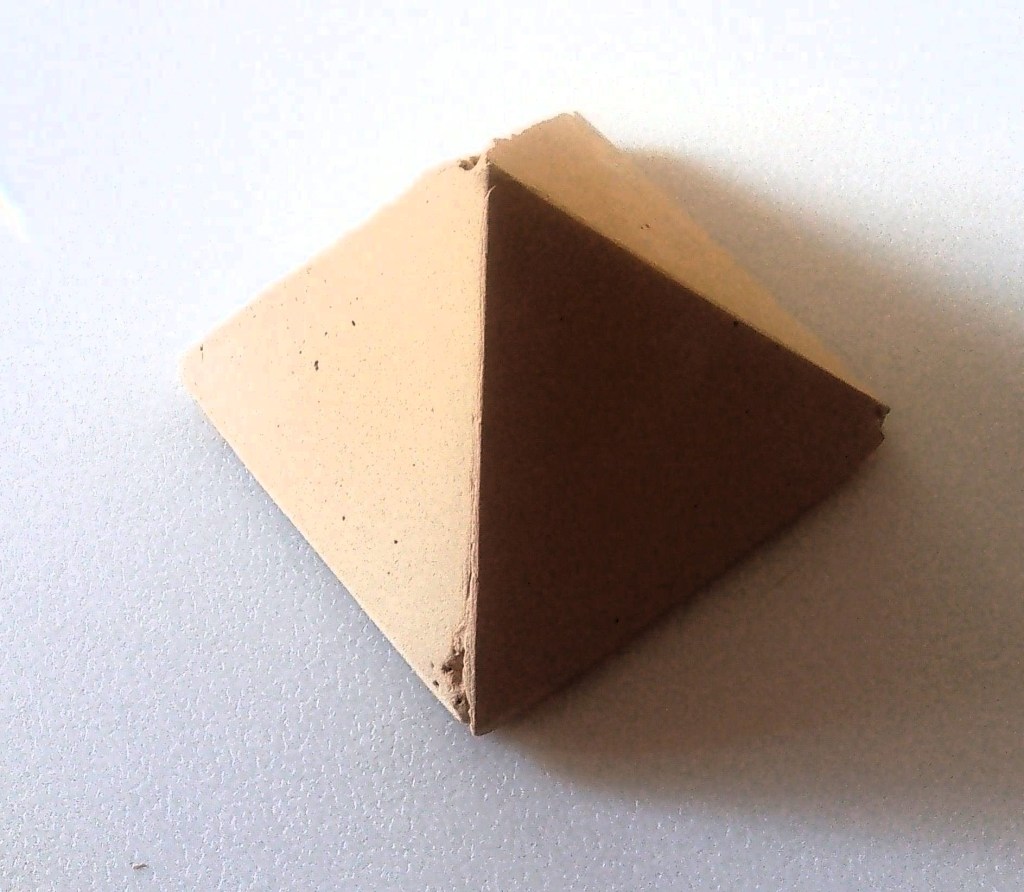
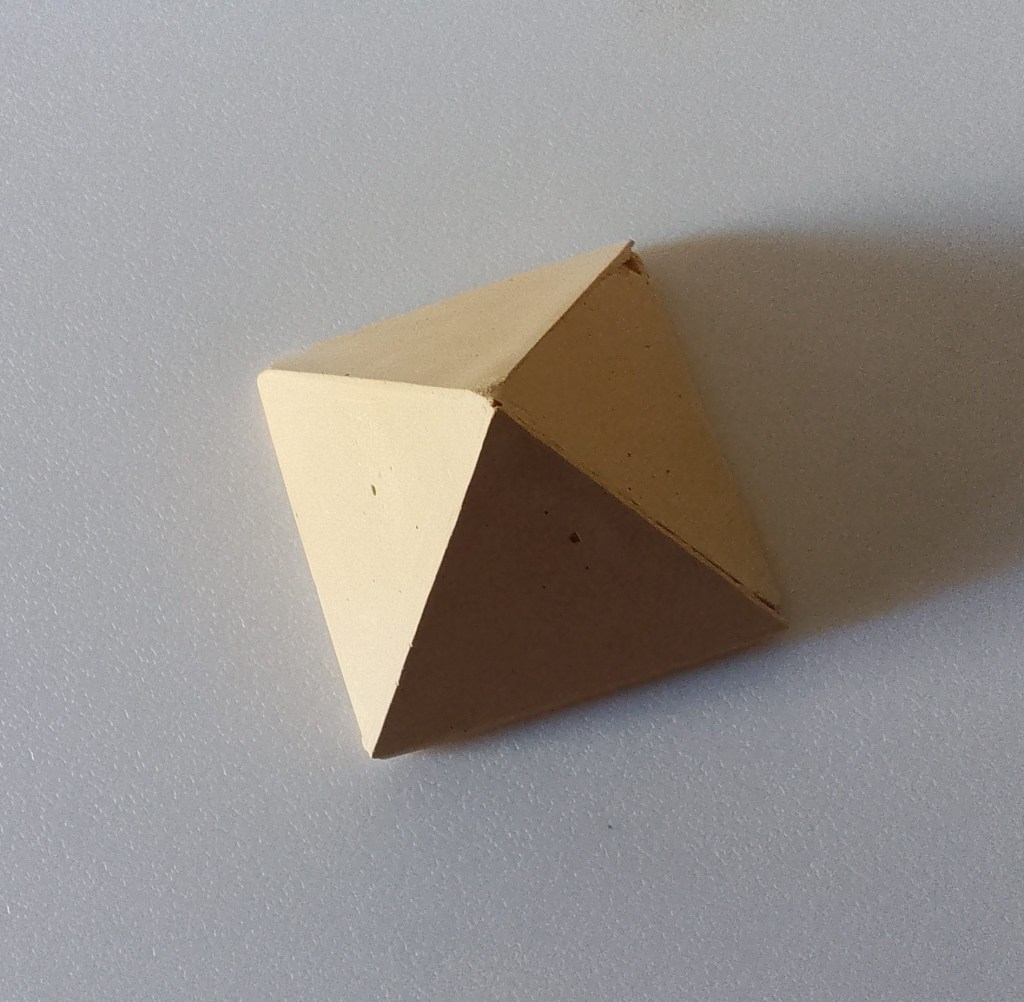
I have built a pyramid from scratch.
Starting from the height of the blocks (0.5 cm) and the desired width of the base (7.5 cm) and height (5.5 cm) of the pyramid, I computed the width offset between layers and with it the 2D dimensions of the blocks in each layer.
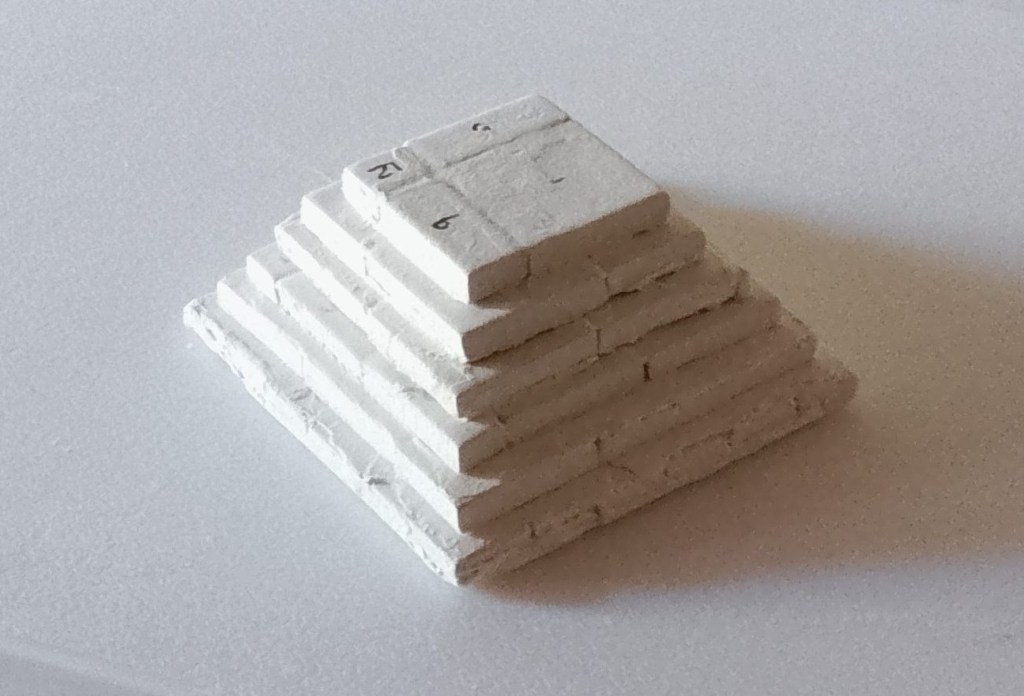
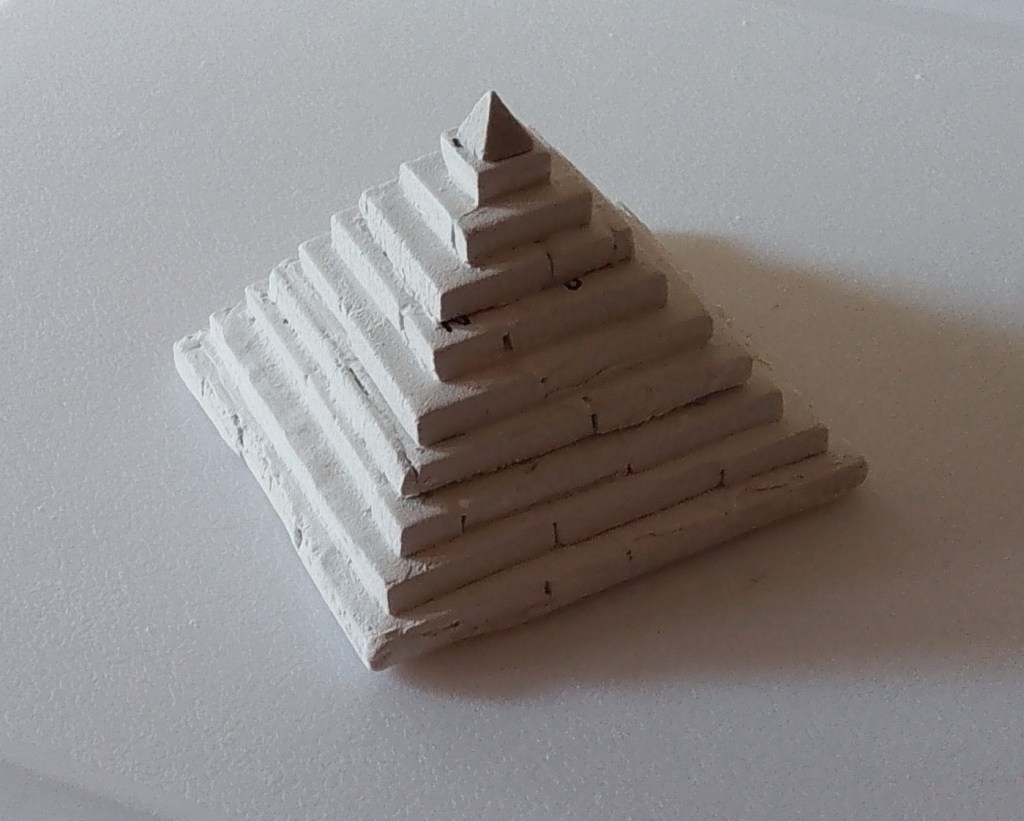
I used 48 blocks with different dimensions stacked in 9 layers.
The calculations are as follows:
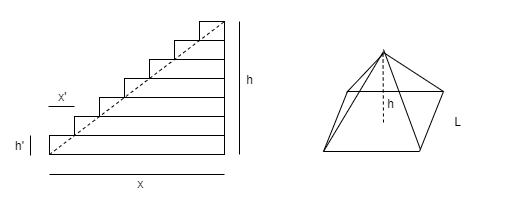
h’ divides h in as many parts as x’ divides x.
Therefore, h = k h’ and x = k x’ with k natural and equal to the number of blocks in height.
Therefore, x’ = x / k = x h’ / h.
In a pyramid, the base side will be L = 2x, so x’ = L h’ / (2 h).
The width of the n-th layer will be L(n) = L – 2 x’ n.
The dimensions of the block in each layer depend on the architecture which I chose to be such as to preserve the maximum number of blocks with their original standard dimension which is 2.5 x 2.5 cm. This architecture gives 3 types of blocks which are the standard one, the one with one dimension dependant on the layer and another one with both dimensions dependant on the layer.
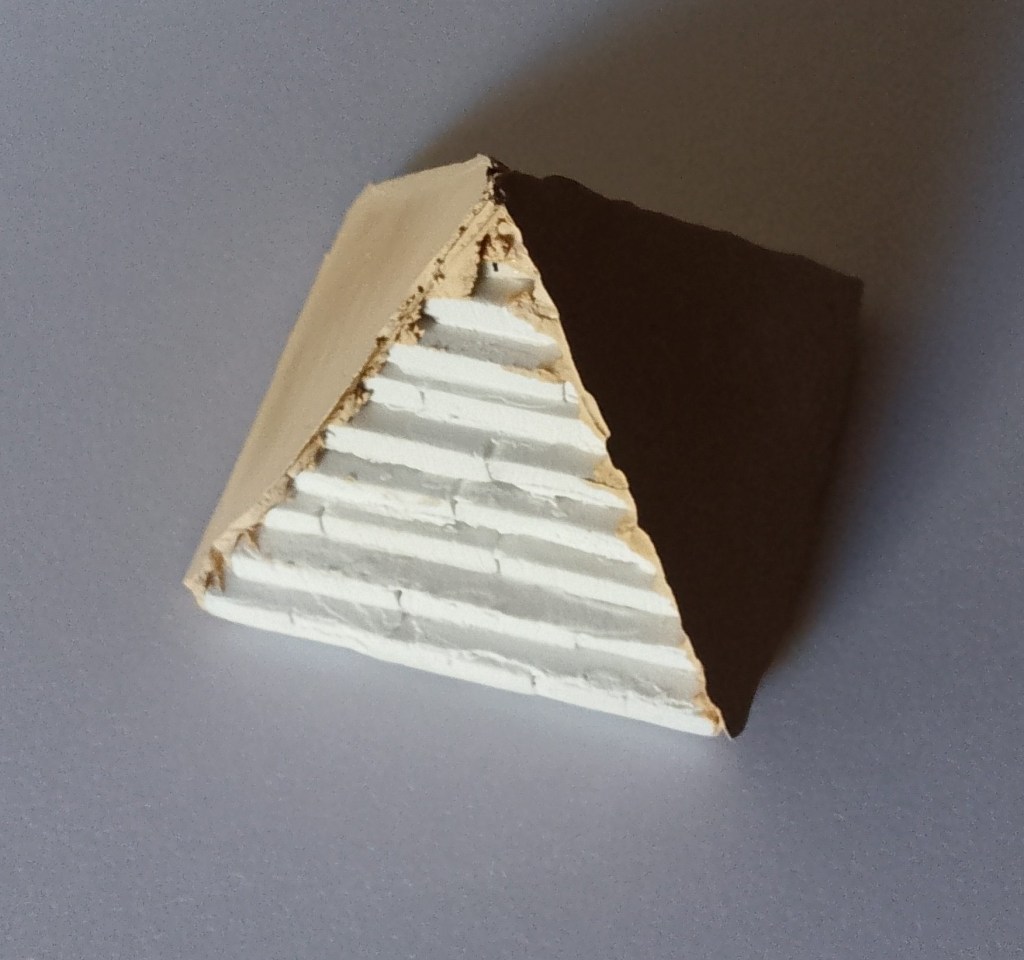
I made the blocks with air dry clay and I used white cement and ocher yellow powder for the external cover.

 Compliments of the Author