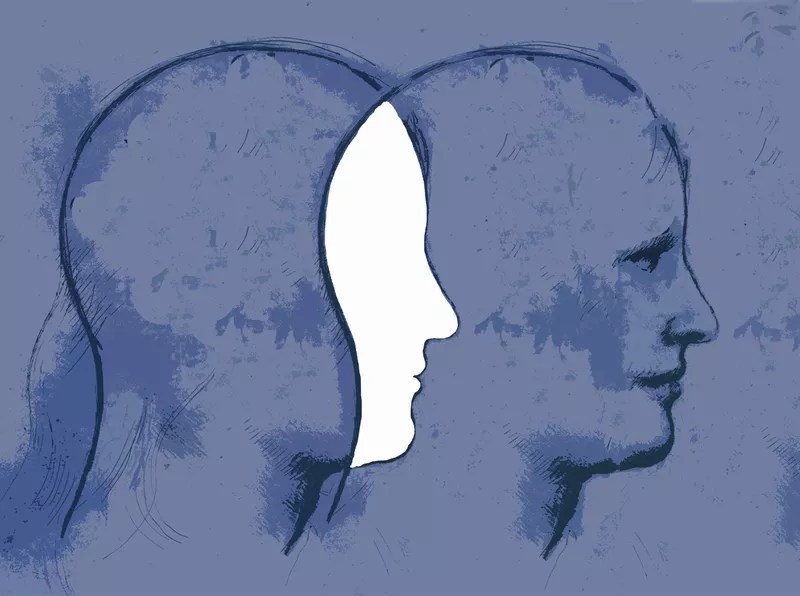
Here I address the question of knowing wether the Self, meaning whatever we call ourselves, is indivisible or otherwise.
The sole assumption on which the reasoning rests is this:
— there is nothing which cannot be the object of perception, be it trough the senses or the intelect.
Now we assume that the self is indivisible.
If that is the case, then the self cannot uniquely identify with any specific (indivisible) object of perception, because there is no assumption that favours that object over any other. If we did identify it with a particular object, we would be contradicting its indivisibility since that identification would be arbitrary. That is, we would be stating that any object of perception could satisfy the requirements of an indivisible self.
Since by assumption there is nothing which cannot be the object of perception, then the indivisible self would be nothing, that is, that which cannot be object of perception.
We contradicted the indivisibility assumption, therefore proving it false.
This leaves the only alternative, that is the complement of the indivisibility of the self: the self is the whole of “its” perceptions. There is nothing else other than everything that is perceivable, hence the quoted “its”. No intermediate subset of it could be termed “self”.
This in turn means that the conscious effort (or the “life of the self”, or “consciousness”) is the distinguishing of a part of the self into an object of perception.
Of course we can explore other knowledge basis in which we admit the opposite of the first assumption (which is undoubtely an anthropocentric one), but the least we should do in any case is to make clear what are the minimal parameters, that is, the degree of choice we have to be able to develop knowledge about any subject. Another way to put this, is that here the structure of knowledge is no less important than the meaning of that structure.
More generaly, this structure means that if we admit the indivisibility of the Self, then we cannot turn it into an object of perception. Moreover, regardless of divisibility, the Self is in any case unperceivable.
Final remarks:
- pay attention to the implications of the initial assumption, which apply directly to any scientific endeavour and to scientific fields of knowledge. In particular, in Medicine. Here care to understand how its understanding of the personality fares against its own rational and scholastic assumptions.
- we can easily generalize the assertions to other objects of the intellect other than the Self, with the same results.
- this explains why the platonic world of ideas is, to our understanding, absolutely divorced from the realm of its concrete manifestations, although obviously both should be related regardless of our ability to perceive, ever since we admit the idealistic equivalence class of objects.
- we are not an agent that acts, feels and understands; we are literally what we do, feel and understand. This also explains the effectiveness of propaganda and coercion on the development of mass psychosis.
- this is in accord with Adyashanti’s notion that “Everything is I” as exposed in this video
- this does not mean that the Self does not exist, or that the knower does not exist, but instead that it is impossible to identify what that is.
- remark #4 is worth considering on a cartesian and rosicrucian perspective, since it is equivalent to asserting the reality of any intellectually formulated concept.
 Compliments of the Author